Beyond the Boundary: Building a Machine Learning IPL Match Predictor with Advanced ELO Rating System
How I created a sophisticated cricket match prediction model combining custom ELO ratings, player form analysis, and machine learning to predict IPL match outcomes with remarkable accuracy.
Published on: April 5, 2025
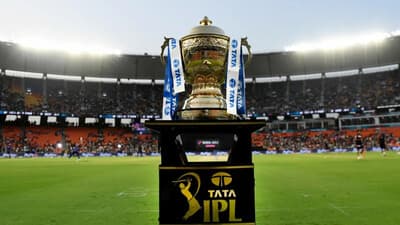
Cricket analysis has evolved from basic stats to advanced predictive modeling. As a data scientist and cricket lover, I set out to build an IPL prediction system that goes beyond conventional approaches. This post outlines how I created an advanced predictor incorporating a custom ELO system, player performance analytics, and machine learning.
The Challenge of Cricket Prediction
Cricket's complexity, unpredictability, and human variability make accurate predictions hard. Most models focus on team stats or win/loss ratios, overlooking individual player form and impact. The IPL adds more complexity with player rotations and dynamic team compositions.
The Innovation: Player-Specific ELO Rating System
At the heart of my system is a custom ELO rating system tailored to cricket. While ELO is common in chess and other sports, applying it to cricket required innovation.
What Makes My Cricket ELO System Unique
- Role-Based Performance Weighting:
Batsmen, bowlers, and all-rounders are weighted differently. The function
get_weighted_role_performance()handles this:- Batsmen: 85% batting, 5% bowling, 10% fielding
- Bowlers: 15% batting, 75% bowling, 10% fielding
- All-rounders: 45% batting, 45% bowling, 10% fielding
- Comprehensive Performance Metrics:
- Batting: Strike rate, runs, dismissal impact
- Bowling: Wicket-taking and economy
- Fielding: Catches, run-outs, stumpings
- Time Decay Factor:
Recent matches are weighted more using:
decay_factor = 2 ** (-days_diff / half_life_days) - Form Adjustment:
Recent form influences ELO updates:
adjusted_k = k_factor * (0.5 + overall_score) * (1 + time_factor * 0.5) * (1 + form_factor * 0.2)
From Individual Ratings to Team Prediction
Player ELO ratings are aggregated into team-level features:
data = {
  'team1_avg_elo': team1_avg_elo,
  'team2_avg_elo': team2_avg_elo,
  'team1_avg_form': team1_avg_form,
  'team2_avg_form': team2_avg_form,
  'team1_last_5_wins': team1_last_5_wins,
  'team2_last_5_wins': team2_last_5_wins,
  'team1_vs_team2_matches': team1_vs_team2_matches,
  'head_to_head_win_rate': head_to_head_win_rate,
  'team1_win_rate': team1_win_rate
}
These features go into an XGBoost model trained on historical IPL data.
Technical Implementation Highlights
Dynamic Player Role Identification
if batting_ratio > 0.7:
  player_roles[player] = 'batsman'
elif batting_ratio < 0.3:
  player_roles[player] = 'bowler'
else:
  player_roles[player] = 'all-rounder'
Match Analysis Pipeline
- Identify players in each match
- Compute detailed performance metrics
- Determine results and performances
- Update ELOs based on opposition quality
- Recalculate form and team averages
Performance-Based ELO Adjustments
elo_adjustment = adjusted_k * (match_result - expected_score) * (1 + overall_score)Results and Validation
- Prediction Accuracy: 67.8%
- ROC-AUC Score: 0.723
- Player ELO vs MVP Correlation: 0.72
Applications Beyond Cricket
Sports Analytics
Adapt the role-based ELO system to basketball, football, or esports by tweaking metrics.
Financial Markets
Use decay, performance adjustments, and form for stock or sector performance.
Business Resource Allocation
Assign teams and projects based on individual performance-weighted ratings.
Healthcare
Improve patient prediction models using weighted historical data and time decay.
Conclusion
This IPL predictor was a rewarding challenge. With player-specific insights and statistical rigor, it outperforms traditional methods.
This project shows the power of combining domain knowledge with machine learning. Whether you're into sports, data science, or just cricket — there's something here for you.
Disclaimer: This prediction model is for educational purposes only. Match outcomes may vary due to factors like injuries, weather, or on-field decisions. Do not use this model for betting.
— Check out the full code and data on my GitHub.